Cataract, Refractive, Issue Cover, Glaucoma
Debating the Future of Glaucoma Surgery
Challenges and opportunities await cataract surgeons interested in integrating early glaucoma treatment as part of comprehensive care.


Sean Henahan
Published: Friday, May 1, 2026
As cataract surgeons increasingly take on glaucoma procedures, the divide between the two fields is blurring, prompting one speaker at a recent ophthalmology conference to comment that someday there might need to be a ‘G’ for glaucoma added to the ESCRS acronym. Dr Robert Osher’s popular Video Journal of Cataract, Refractive, and (most recently) Glaucoma Surgery (VJCRGS) has already seen this change.1 While it is unlikely the ESCRS will add a new letter to its acronym any time soon, it is not unlikely that cataract surgeons will be including more glaucoma management in their practices.
The traditional approach in glaucoma treatment has been to prescribe drops early, reserving trabeculectomy surgery for later, with the goal of keeping intraocular pressure (IOP) under control to slow optic nerve damage. While this goal remains the same, dissatisfaction with poor compliance with drop regimens coupled with various bleb-free surgical options (particularly in combination with phacoemulsification) have driven a new interest in earlier intervention by cataract surgeons.
“The cataract surgeon has transformed from being solely a lens specialist to an active decision maker in early glaucoma management. We are no longer merely recognising glaucoma as a secondary condition; instead, we are managing glaucoma alongside cataract surgery, particularly during combined procedures like MIGS. This change indicates a shift towards earlier, more integrated, and patient-centred care, where reducing medication load and enhancing long-term adherence are as vital as visual restoration,” ESCRS president Burkhard Dick MD, PhD told EuroTimes.
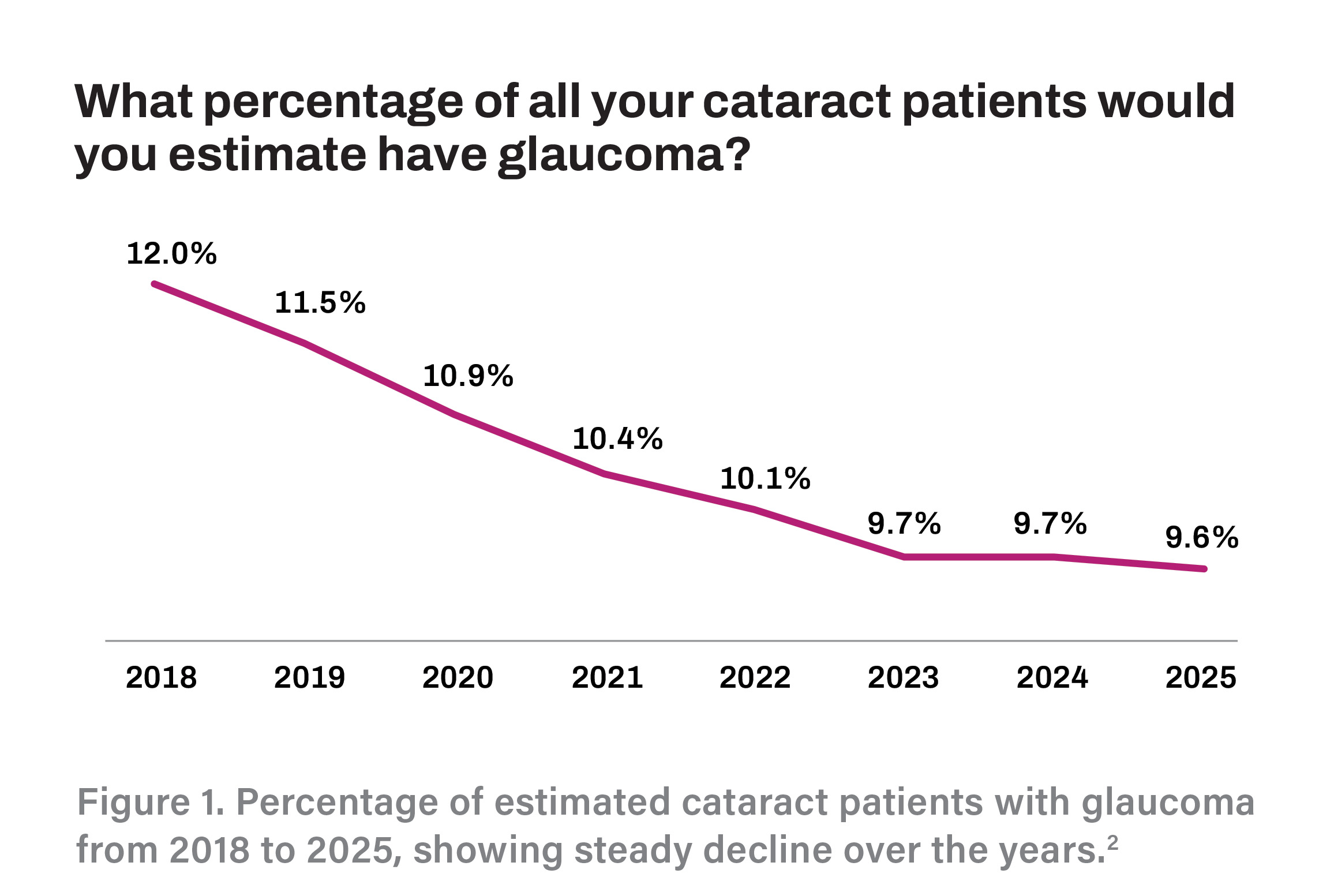
In a recent edition of the ESCRS Clinical Trends Series, Professor Dick discussed key findings from the 2025 ESCRS Clinical Trends Survey, providing an in-depth analysis of how Society members now approach glaucoma management.2 One interesting finding was the steady decline in the reported percentage of cataract patients with glaucoma since 2018. He attributes this to earlier cataract surgery, combined procedures (e.g., combining cataract surgery and minimally invasive glaucoma surgery [MIGS]), and a denominator effect wherein the growing number of non-glaucoma patients undergoing cataract surgery lowers the overall proportion with coexisting glaucoma. Nonetheless, overall global demographic trends suggest glaucoma cases will only increase in coming years.
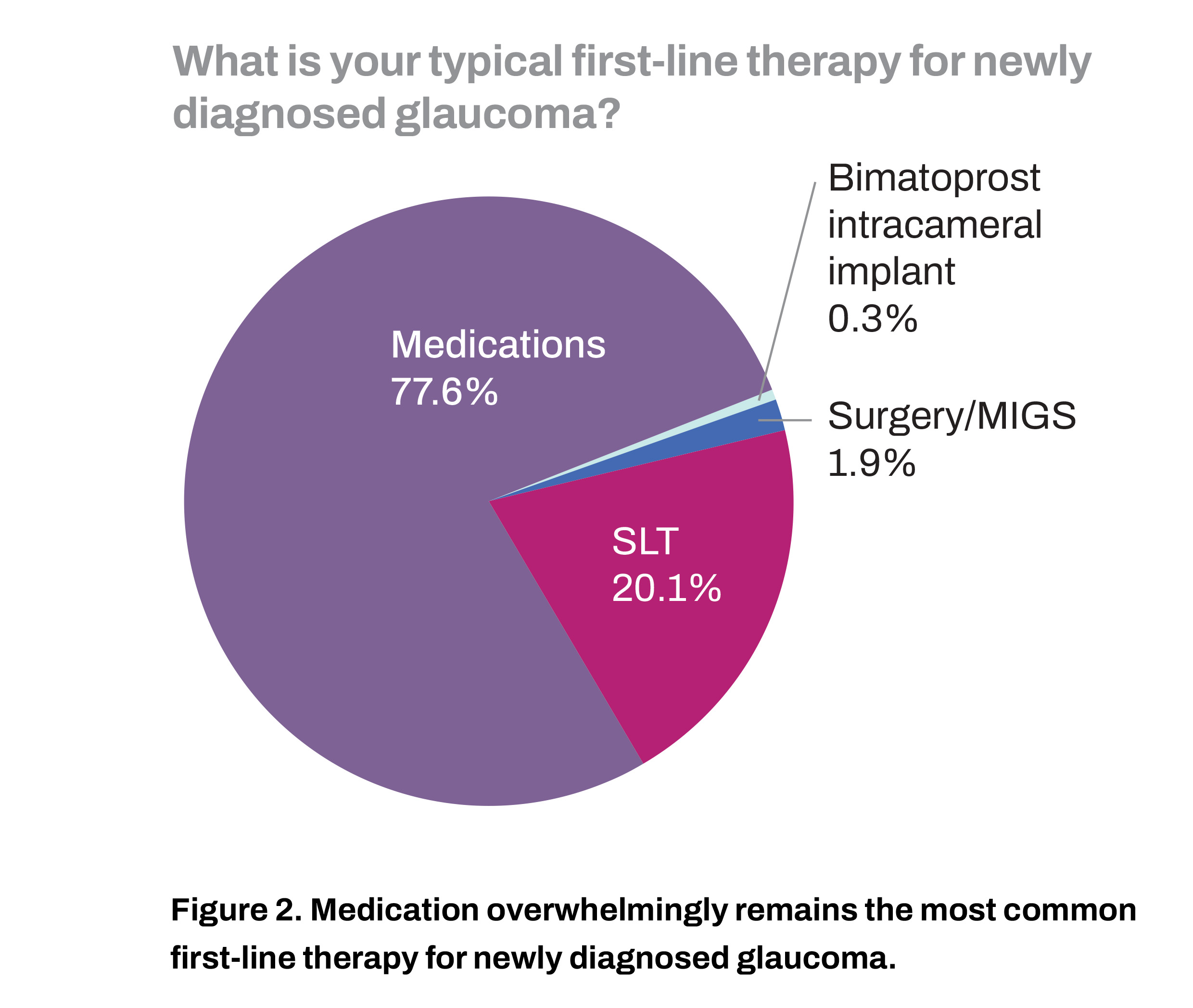
An ESCRS survey indicated that medications were a first-line therapy for 77.6% of survey participants, followed by 20.1% who perform selective laser trabeculoplasty (SLT) and 1.9% who choose MIGS as an initial approach. The survey noted that while 15% of cataract surgery candidates on topical therapy could be considered MIGS candidates, a majority of ESCRS respondents (58%) lack confidence in performing MIGS procedures on cataract surgery patients.2
The utility of standard SLT as an effective first-line treatment was confirmed in the prospective, multicentre, randomised, controlled Laser in Glaucoma and ocular Hypertension Trial (LiGHT) study, which concluded the procedure was more cost-effective than IOP-lowering drops.3 Consequently, SLT is now recommended as a first-line intervention for lowering IOP in open-angle glaucoma by the European Glaucoma Society.4
But it was the development of direct SLT (DSLT; Voyager, Alcon), which eliminates the need for a gonioscopy lens and coupling medium, that made this option available for non-glaucoma specialists. The prospective GLAUrious study compared DSLT with conventional SLT.5 The 6-month primary endpoint did not achieve statistical noninferiority compared with conventional SLT. However, DSLT did provide an effective reduction in IOP that was sustained for 12 months.
Adopting DSLT offers a solution for helping glaucoma specialists and general ophthalmologists meet the increasing demand for services from the expected growing population of patients with glaucoma, said Christine Funke MD.6
“I am using DSLT frequently in my clinic, and I think and hope this machine will help push the envelope so SLT is used more as first-line therapy for IOP lowering,” she said. “DSLT is a simple and user-friendly procedure. By eliminating the need for a gonio lens, it also means there should be no more excuses for not doing SLT.” 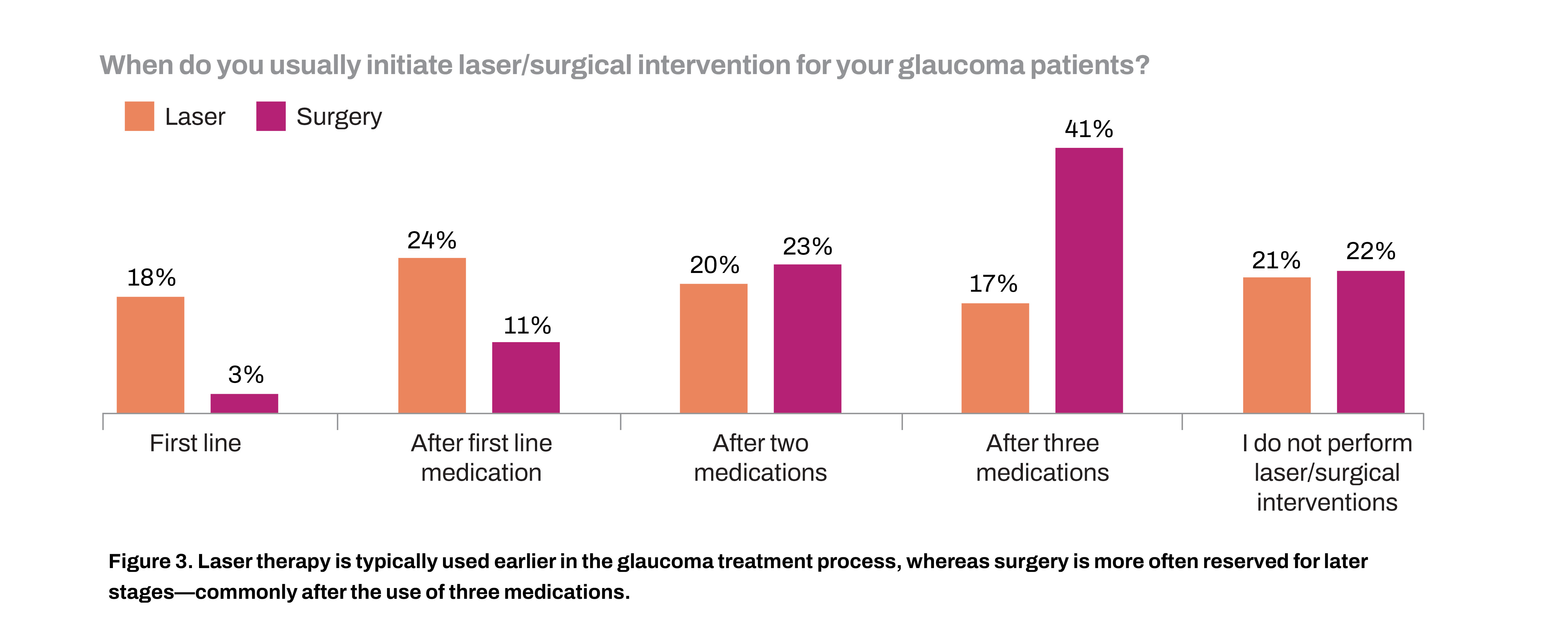
Another innovative approach called femtosecond laser, image-guided, high-precision trabeculotomy (FLiGHT, ViaLase) adds to the trend towards laser first therapy. The device uses a femtosecond laser to cut precise apertures in the trabecular meshwork, guided by real-time, ultra-high-definition gonioscopic and optical coherence tomography imaging. A clinical study found mean IOP was reduced by nearly 35% at 24 months with no serious adverse events reported.7
Pursuing a similar approach, the ELIOS procedure (Bausch + Lomb) uses an excimer laser to facilitate aqueous outflow via microchannels in the trabecular meshwork. The procedure is available in Europe but has yet to receive US FDA approval. Bausch + Lomb recently announced 24-month results from a new prospective, multicentre clinical study of the ELIOS System, with most patients medication free at 23 months.8
Please see related articles in this issue for an update on new MIGS procedures and the use of AI for glaucoma screening.
1. Video Journal of Cataract, Refractive, and Glaucoma Surgery. https://vjcrgs.com/
2. ESCRS Supplement. https://www.escrs.org/channels/ eurotimes-articles/supplement-escrs-clinical-trends-series-glaucoma
3. Wright DM, et al. Ophthalmology, 2020; 127(10): 1313–1321.
4. EGS Publications. “Terminology and Guidelines for Glaucoma”; “A guide on Surgical Innovation for Glaucoma.” Both are available in multiple languages at www.eugs.org
5. Gazzard G, et al. Ophthalmology, 2025 Oct; 132(10): 1091–1104.
6. Funke C. EuroTimes, 2025; 30(Q3): 28. https://issuu.com/ eurotimes/docs/eurotimes_online_q3
7. Nagy Z, et al. Ophthalmology Science, 2023 Apr; 3(4): 100313.
8. Bausch + Lomb. “Bausch + Lomb Announces Positive 24-Month US Data on the ELOIS System for Treatment of Glaucoma,” 2026 Mar 23. https://www.bausch.com/newsroom/news/?id=319