Meetings, Cataract, Refractive
Head-to-Head Trials Reveal Laser Vision Correction Surgery Differences
Examining the evidence from laser vision correction surgery outcomes.


Cheryl Guttman Krader
Published: Monday, September 28, 2026
An appraisal of published head-to-head clinical trials comparing laser vision correction (LVC) procedures shows that all are safe and effective, although there are some nuanced differences between them, said Edward E Manche MD.
Speaking at a session on “Evidence-Based Refractive Surgery” during the Global Refractive Summit on Friday, Dr Manche reviewed outcomes of prospective, randomised, controlled studies investigating topography-guided (TPG)-LASIK, wavefront-guided (WFG)-LASIK, wavefront-optimised (WFO)-LASIK, raytracing (RT)-LASIK, and keratorefractive lenticule extraction (KLEx) for myopia/myopic astigmatism.
“When trying to determine the relative safety and efficacy of different treatment options, it is essential to concentrate on results from level one research publications because, with their rigorous design, these studies typically yield closely matched groups and minimise confounding from differences that can be present in cohorts drawn from retrospective chart reviews or when making cross-study comparisons of groups from single-arm prospective studies,” he explained.
The main theme to emerge from his evidence-based review was that there are advantages to the most customised techniques. The greatest volume of available literature compares WFG-LASIK with WFO- or TPG-LASIK, and the results of those studies seem to show some clear differences favouring WFG-LASIK. 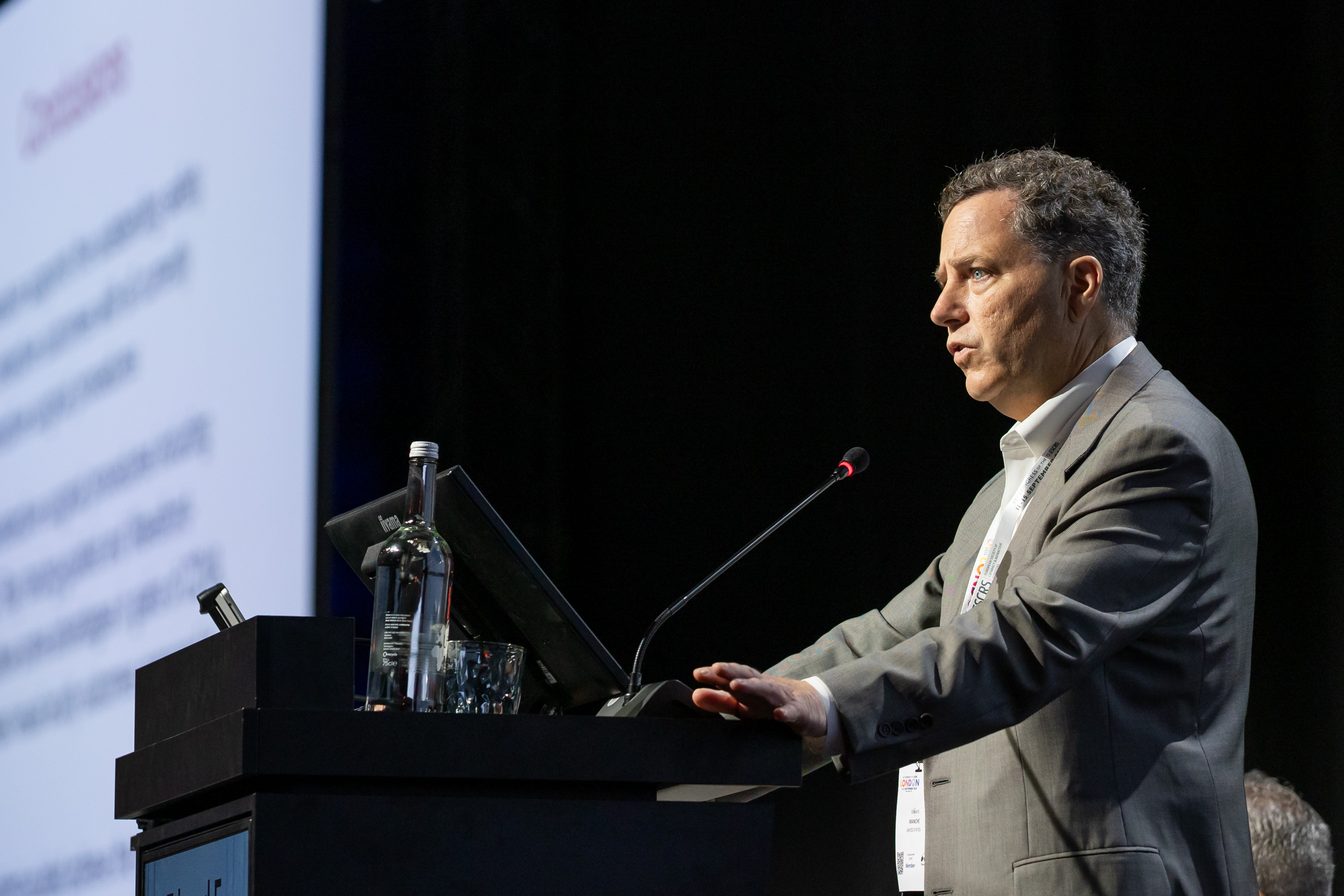
“From a topline view, all the procedures have predictable refractive accuracy, including for astigmatic correction, and consistently provide high levels of 20/20 uncorrected visual acuity (UCVA),” Dr Manche said. “However, WFG-LASIK is associated with higher rates of 20/16 or better UCVA and superior outcomes for better low-contrast visual acuity (LCVA) and lines gained in corrected distance visual acuity (CDVA), which are endpoints relevant to quality of vision.”
Prospective randomised studies comparing RT-LASIK, the newest iteration of LVC, are limited. However, the available data suggests that this technique, which integrates wavefront aberrometry, corneal tomography, and interferometry into its algorithm to generate a highly customised ablation plan, yields better outcomes than both WFO- and TPG-LASIK.
Head-to-head studies of LASIK and KLEx are also relatively scarce. In a contralateral eye study Dr Manche conducted using WFG-LASIK and small incision lenticule extraction (SMILE) to treat myopia in eyes with low levels of astigmatism, the LASIK-treated eyes had better LCVA and greater gains in UCVA. As a caveat, however, he noted SMILE was performed using the first generation VisuMax 500 kHz laser (Zeiss).
Dr Manche also discussed two studies comparing RT-LASIK to SMILE Pro, performed using the VISUMAX 800 femtosecond laser. Both studies are prospective, randomised, contralateral comparisons of RT-LASIK and SMILE Pro that found superior outcomes with the RT-LASIK procedure, which provided higher levels of UCVA (i.e., 20/12.5), greater gains in CDVA, and better astigmatic correction.
“There had been a period of relative quietness in LVC surgery in terms of further refinements in technique and hardware innovations, but the introduction of RT-LASIK reminds us to expect ongoing innovations,” Dr Manche said. “More experience is needed with RT-LASIK, but I consider it very exciting and one of the most innovative developments in refractive surgery in the past decade.”
Edward E Manche MD is Professor of Ophthalmology at Stanford University School of Medicine and Director of Cornea and Refractive Surgery at the Stanford Eye Laser Center, Stanford, California, US.