Meetings, Cataract, Patient Journey
Going with the Flow
Ridley Medal Lecture explores comprehensive approach to streamlining cataract surgery.


Sean Henahan
Published: Friday, October 2, 2026
“ It’s now really about the patient journey, ideally reducing friction and anxiety. “
Oliver Findl MD, PhD is the 2026 recipient of the ESCRS Ridley Medal. In “The Flow of Cataract Surgery”, he discussed the evolution of cataract surgery from the era of Sir Harold Ridley, who implanted the first IOL, to the present day, marked by growing patient volumes, AI, and increasing environmental concerns. He emphasised the importance of organisation and efficiency in meeting current demand without sacrificing the human touch. Central to this approach is the concept of flow, which he examined as a means of both optimising efficiency as well as fostering a less stressful experience for patients, surgeons, and everyone involved in the surgical journey.
Harold Ridley implanted the first IOL in late 1949 at St Thomas’ Hospital in London. A look at his operating book revealed he eventually would perform two to four cataract operations per day. Moreover, there were very few surgeons with the necessary skills to perform cataract surgery.
“A question Dr Ridley probably never asked himself is, ‘Does the whole system really flow?’ That wasn’t so critical at the time,” Professor Findl noted. “It’s now really about the patient journey, ideally reducing friction and anxiety. It’s about information, how does data move seamlessly, so digitisation is important, and of course, the surgeon, the team, the flow state.”
Prof Findl noted how demand for cataract surgery has risen steadily in the past 20 years as the technology has evolved. He cited studies indicating that ageing baby boomers in Europe and the US pushed demand to an all-time high, with many now in their 70s and 80s. That demand is expected to level off by 2040.
As volumes rise, optimising patient flow has become essential. Prof Findl shared processes instituted in his own centre to meet this need without sacrificing quality or patient experience.
But improving flow in the operating theatre involves more than planning and efficiency. Prof Findl highlighted a deeper concept familiar to elite athletes and musicians, described in Flow: The Psychology of Optimal Experience by Mihaly Csikszentmihalyi. The book describes flow as a state of complete absorption in an activity, where time melts away and peak performance is achieved in a relaxed, stress-free mental state.
Prof Findl said creating this sense of flow in cataract surgery requires attention not only to logistics but the patient experience. Optimising flow starts even before the patient arrives for surgery. Patients have a lot of fear and uncertainty when they come for their preoperative assessment in the clinic, making preparation incredibly important.
A prepared patient is essential for a smoothly flowing clinic. Prof Findl recommended a combination of online, face-to-face, phone, and text-based patient communication to keep things flowing before, during, and after surgery.
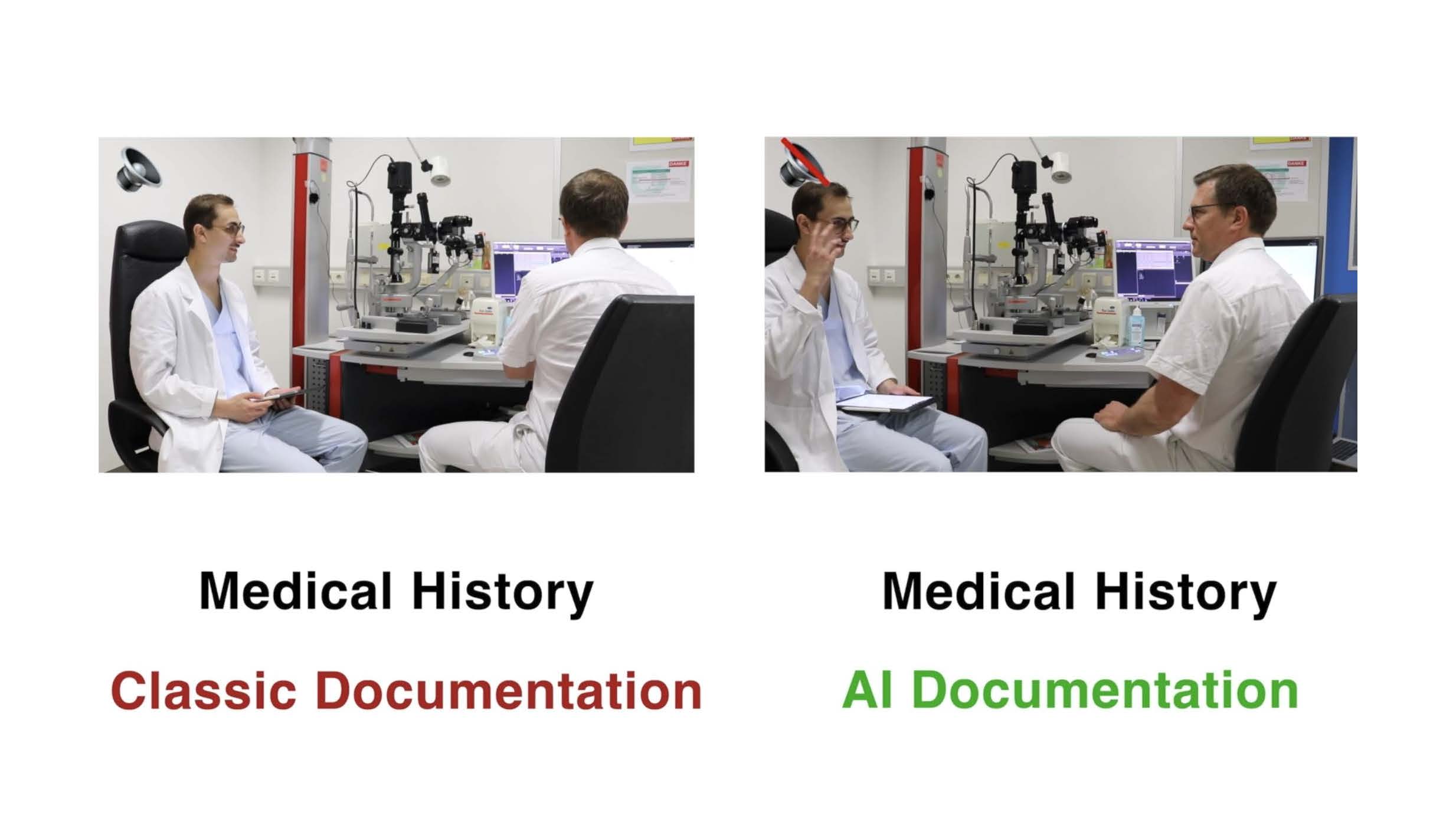
For example, he created an informed consent form using ChatGPT that he keeps on an iPad during patient interviews. This improves patient communication by reducing the time spent looking at the chart, while also reducing overall consultation times. ChatGPT also serves as an AI scribe.
Prof Findl also stressed the importance of surgeon well-being to the overall flow of cataract surgery. On a practical level, his centre conducted studies to optimise the operating theatre (OR) layout to minimise unnecessary movement. His centre also measured surgeons’ stress levels during surgery and introduced strategies to reduce them. For example, the team found that having a mobile phone in the OR increased stress, as reflected by heart rate variability.
“It’s usually because somebody calls me and I have to give an answer, or I have to enter the data into our EMR, which is obviously also often very painful,” he said. “And so, interestingly, stress can be induced not only by the surgery itself, but actually by the surroundings. So try to get the phone out of the operating rooms, or have somebody else answer it.”
In a broader global view, Prof Findl explained how increasing efficiency can also increase sustainability, sharing his efforts to improve sustainability in cataract surgery and outlining how others can reduce waste in the OR. He cited the value of the EyeSustain, an international collaboration of ophthalmology groups dedicated to this cause, as well as the ESCRS SIDICS tool.
Oliver Findl MD, PhD, MBA, FEBO is Professor of Ophthalmology, Chair, Department of Ophthalmology, Hanusch Hospital, Vienna, Austria. He is the founder and head of the Vienna Institute for Research in Ocular Surgery (VIROS). He is a past president of the ESCRS.